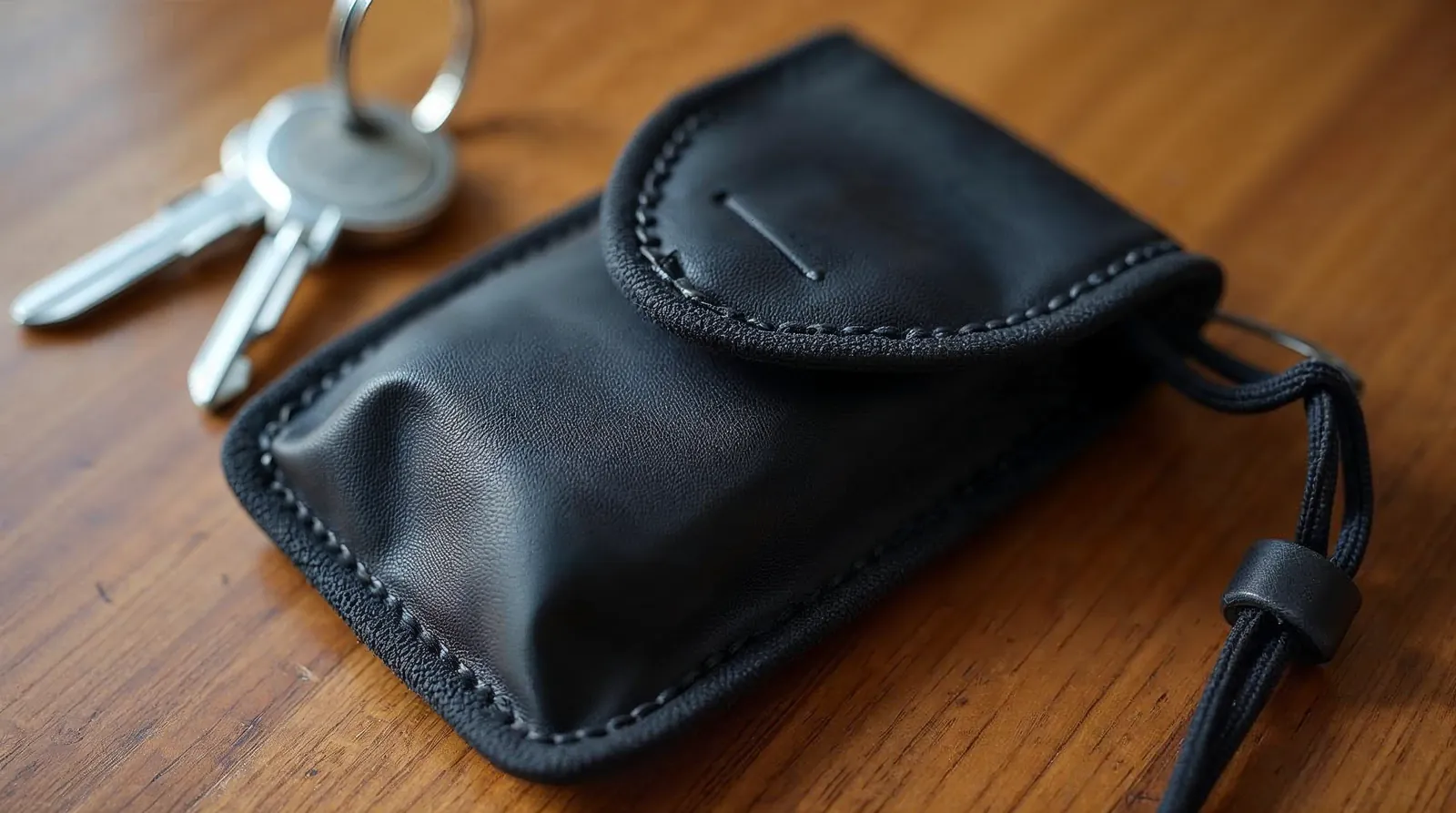
Walk past any row of parked cars in Doha or Dubai and you will see the telltale glow of keyless entry systems waiting for a signal. The fob in your pocket is not passive. It transmits constantly, which is exactly what makes it useful and exactly what makes it vulnerable. A relay attack takes that faint radio signal, amplifies it, and bounces it toward your car from a surprising distance. The whole process can take less than a minute.
Faraday pouches are the most common response to that threat. They promise to shut the signal down completely, turning a chatty key into a silent piece of plastic. But the question readers ask most is blunt. Do they actually work, and how long do they keep working? The answer depends on how they are built, how they are sealed, and how often they are tested.
How relay attacks turn a quiet key into a stolen car
Keyless entry systems rely on a short-range radio conversation between the fob and the car. Thieves do not need to touch the key or even see it. One device stands near your front door and captures the faint signal from the key inside. Another device stands next to the car and repeats that signal. The car believes the owner is present, unlocks, and starts.
This method is not theoretical. Doorbell camera footage from neighbourhoods in the Gulf and elsewhere has shown groups using signal booster equipment to reach keys kept well inside a house. Some readers have tested their own keys from the bottom of a garden, roughly 130 feet from the car, and found the vehicle still responded. Even metal shielding such as roof lead did not always stop the signal in those informal tests.
The uncomfortable truth is that convenience creates the opening. A fob that never sleeps is a fob that can be exploited. Some manufacturers have added motion sensors or sleep timers to newer keys, but those features are not universal and not always reliable. A physical barrier around the key remains one of the few methods the owner can control directly.
What a Faraday pouch actually does to the signal
A Faraday pouch wraps the key in a conductive layer, usually a metal mesh or foil made from copper, nickel, or silver. That layer blocks electromagnetic fields, including the radio frequency identification signal used by keyless fobs. When the pouch is properly closed, the key cannot send or receive anything. The car will not detect it, and a relay device will not find a signal to amplify.
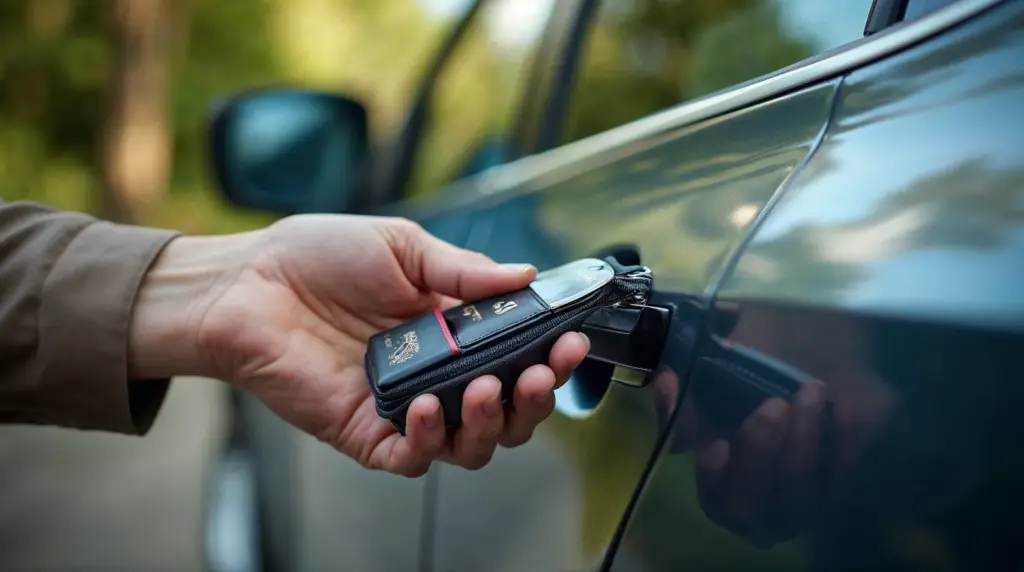
The principle is old. Michael Faraday demonstrated the shielding effect with a metal cage in 1836, and the same physics applies inside a small fabric pouch today. The material matters less than the completeness of the enclosure. Any gap, tear, or loose fold becomes an antenna. A pouch that is ninety percent sealed may still leak enough signal for a determined thief with a sensitive booster.
That is why testing is essential. One practical method is to place the fob inside the pouch, walk to the car, and try the door handle. Then sit inside and press the start button. If the car stays silent, the pouch is doing its job. A second test uses a mobile phone. Put the phone in the pouch and call it from another handset. If it rings, the pouch is not blocking radio waves effectively.
Why some pouches fail after weeks or months
Faraday pouches are not permanent equipment. The internal metal lining is thin and flexible, which makes it easy to fold and carry but also easy to damage. Daily use rubs the lining against itself, especially near the opening. Over time, small cracks and worn patches appear. The pouch still looks fine on the outside while the shielding inside has quietly failed.
Moisture accelerates the problem. Sweat from a pocket, humidity from a coastal climate, or a splash of water can corrode the metal layer. Once corrosion starts, the conductive surface becomes patchy. The pouch may block signals on some days and leak on others. That inconsistency is dangerous because owners assume protection is still active.
Closure design also plays a role. A pouch with a weak flap or a worn Velcro strip may not seal completely. The key sits in a partial cage rather than a full one. Some owners press the unlock button through the outside of the pouch and discover the car still responds, which means the pouch is not shielding that frequency at all. A reliable pouch needs a firm, complete seal every single time.
Testing pouches and boxes against a real car
Independent testing follows a simple routine. The tester places a key fob inside the pouch or box, approaches the vehicle, and checks whether the car detects the key. Then the tester sits inside and attempts to start the engine. A product that passes both tests blocks the signal well enough to stop a relay attack in most real-world conditions.
Build quality varies widely. Some pouches feel sturdy from the first touch, with dense fabric and a strong fastening strip. Others are thin and loosely stitched, with a lining that already shows creases before the first use. Price is not always a reliable guide, but very cheap products often use less durable metals that degrade faster. A well-made pouch should survive months of daily handling if it is not crushed or folded aggressively.
The table below summarizes the main points to check when choosing and using a Faraday pouch or box. These products use conductive materials like metal mesh to block electromagnetic signals from your key fob, preventing thieves from intercepting them with relay devices. Over time, daily wear and tear, physical damage, or corrosion from moisture can degrade the internal lining and cause the pouch to fail. You can test its effectiveness by placing your mobile phone inside and then trying to call it. If the phone does not ring, the pouch is successfully blocking signals.
| Check | What to look for | Why it matters |
|---|---|---|
| Seal quality | Firm Velcro or double fold closure | Any gap lets radio signals escape |
| Lining material | Copper, nickel, or silver mesh | Conductive layer must be continuous |
| Wear signs | Creases, cracks, or dark patches inside | Damaged lining fails without warning |
| Moisture exposure | Keep dry and away from sweat | Corrosion breaks the shielding |
| Regular testing | Try the car and a phone call test | Confirms the pouch still blocks signals |
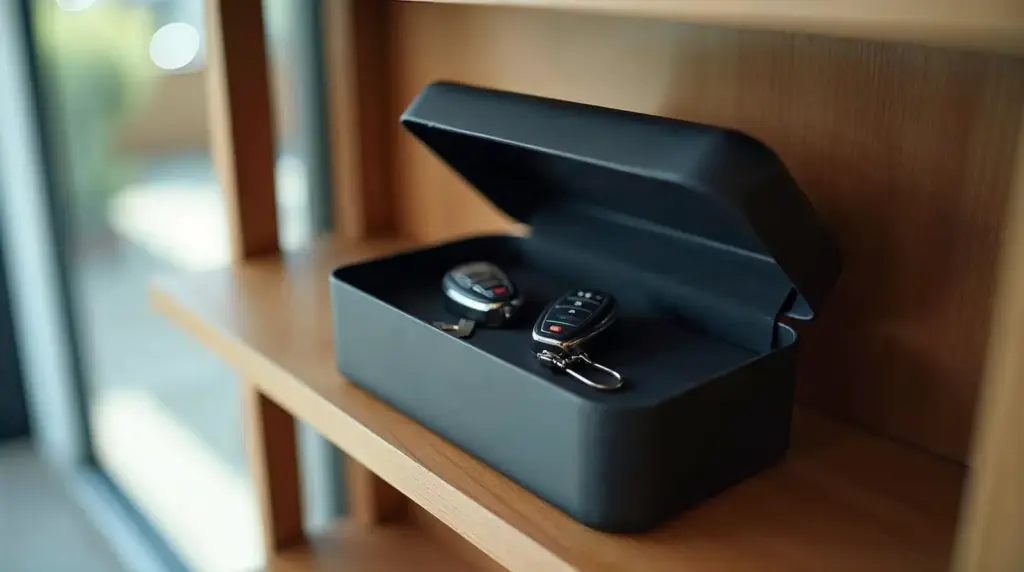
Boxes offer a different profile. A rigid Faraday box sits on a shelf or table and holds one or two keys. The closure is often a lid with a conductive gasket, which can be more reliable than a fabric flap. Boxes do not travel well, but they suit a home routine where keys go into the same place every evening.
Where Faraday protection fits into a wider security routine
A Faraday pouch is a useful layer, not a complete answer. It stops the relay attack at the point where the signal leaves the key. It does nothing for a key that is left out on a hallway table, and it cannot help if the key is stolen physically. Thieves who cannot amplify a signal may simply break a window or try another method.
Physical deterrents still have value. A steering wheel lock slows a thief down and makes the car a less attractive target. An OBD lock blocks the diagnostic port that some criminals use to programme a blank key. Wheel clamps are cumbersome but highly visible. None of these tools is perfect alone, but together they raise the effort required and reduce the chance of a quick, silent theft.
There is also a broader question about key design. Some owners argue that manufacturers should fit a simple on and off switch to every fob. A key that powers down after ten minutes away from the car would be far harder to exploit. Until that becomes standard, the owner has to create the silence manually, and a Faraday pouch is the most practical way to do it.
Building a habit that survives daily life
The best pouch in the world does nothing if it sits in a drawer. The habit has to be automatic. Keys go into the pouch as soon as you walk through the door, and the pouch closes before the keys leave your hand. Spare keys need the same treatment, because a relay attacker does not care which fob is being amplified.
Testing should be part of the routine as well. Regularly take the pouch to the car and confirm the vehicle cannot see the key. Check the lining for wear and feel the seal for gaps. A pouch that fails the test should be replaced immediately, not kept as a backup. The cost of a new pouch is small compared with the cost of a stolen vehicle.
For drivers in Qatar and the wider Gulf, heat is another factor. High cabin and pocket temperatures can soften adhesives and stress thin metal layers over time. Store spare pouches away from direct sunlight and avoid leaving them on a car dashboard. A cool, dry drawer is a better home for a device whose entire job depends on a fragile conductive layer.