Keyless entry feels effortless. You walk up to the car, the door opens, you press a button and the engine wakes. Yet that same convenience is now the weak point in a crime that takes only 20 to 30 seconds. Thieves use relay devices to capture the signal from your key fob, even when it is inside your home, and then fool the car into unlocking and starting. This means a secure car and home may still not be enough to stop a determined thief.
Relay theft does not need a smashed window or a stolen key. It needs a signal, a receiver and a second person standing beside your car. In regions where keyless vehicles are common and many drivers park in driveways, apartment basements and shopping-mall car parks, the risk deserves a clear-eyed response. Simple habits such as keeping keys away from doors and windows can help reduce the danger.
How relay theft works without touching your key
Relay theft exploits the short-range radio link between your fob and the car. One thief stands near your front door or window with a device that captures the key signal, even if the key is inside your home. The device then passes that signal to an accomplice holding a receiver next to the vehicle. This tricks the car into thinking the key is close by, allowing the thieves to unlock it and start the ignition.
Thieves do not need to enter your home to do this. They only need to be within a few metres of the key to capture the signal, even through a wall or a front door. This technique, known as relay theft, involves amplifying the signal from your key fob to fool the car into unlocking. That is why keeping keys away from doors and windows is so important. Storing them in a signal-blocking pouch adds another layer of protection.
Most of these thefts happen on weekday evenings and nights, when people are cooking, watching television or sleeping. A car parked in a driveway is especially convenient for thieves because the short distance from the house to the vehicle makes it easy to capture and relay the key’s signal. This means the vehicle can be unlocked, started and stolen in a matter of seconds. The entire process relies on amplifying the fob’s signal from inside the home without the thief ever needing to enter.
Why the Gulf driving routine needs a small reset
Heat changes habits. Drivers in hot climates often leave cars running to keep the air conditioning cold while stepping into a shop or a mosque. That is not a relay attack, where thieves use devices to capture and amplify a key fob’s signal from outside a home. Instead, it is an invitation to a different kind of theft, as an unattended vehicle with its engine on becomes an easy target for an opportunistic criminal.
Keyless systems encourage drivers to leave the fob in a bag or pocket at all times. The convenience is real, but so is the need for a new routine. A Faraday pouch should become as normal as a phone case or a wallet. This simple habit blocks the signal entirely and prevents criminals from capturing it.
Signal-blocking habits that start inside the home
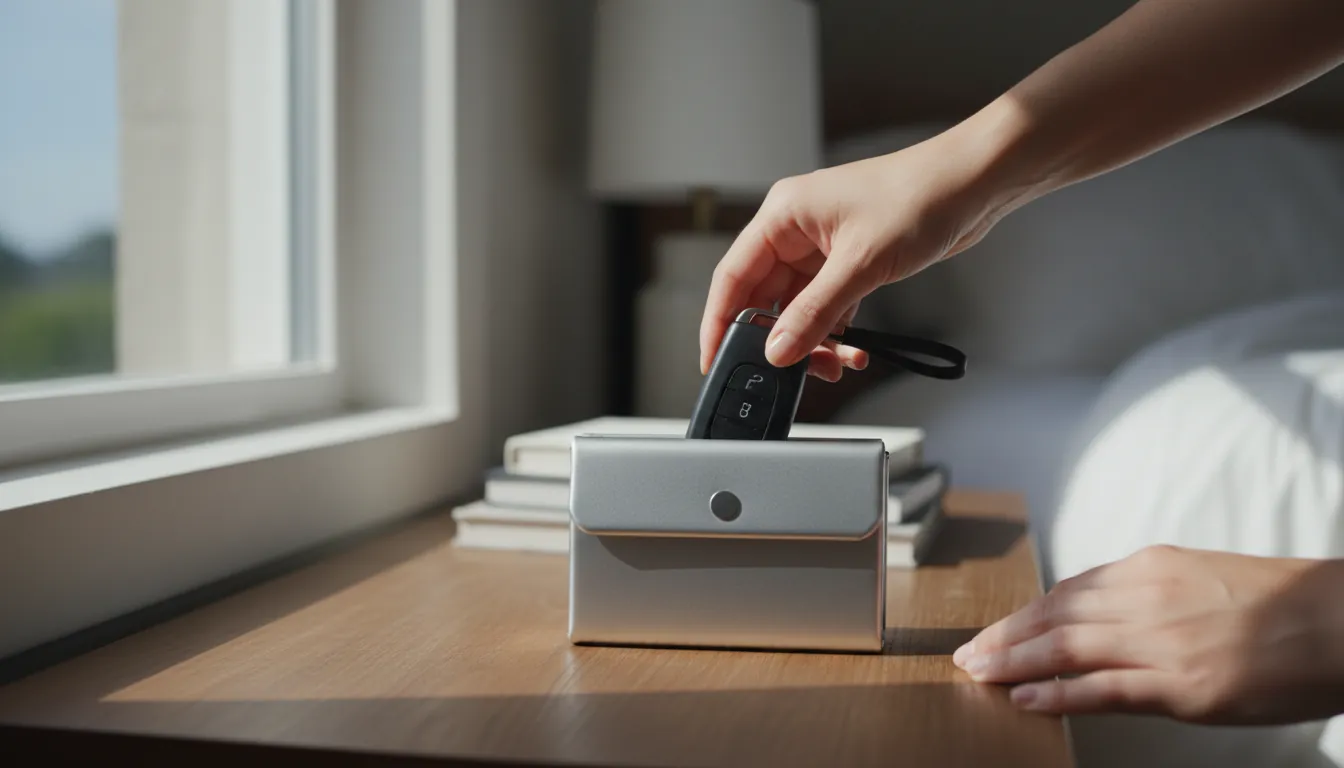
Your first defence is distance. Keep the key and the spare away from the car, doors and windows. A hook in the hallway is a gift to anyone fishing for keys through a letterbox or scanning for a signal from the street. Storing keys deeper inside the house makes it much harder for them to reach or detect the fob.
A Faraday pouch or box blocks the fob signal with a metallic lining. These are small, cheap and easy to use, but their blocking strength can vary, so place the pouch well away from doors and windows. Some drivers ask whether a fridge or microwave works. They can block signals, but they can also damage the fob if you forget where you put it.
If the fob has a wireless-off function, switch it off when it is not being used. That simple step stops the key from transmitting altogether. For drivers who rarely use keyless entry, turning the function off at night removes the relay risk entirely. This is because thieves cannot capture or amplify a signal that is not being sent.
The car park threat and the manual lock check
Public car parks create a different problem. A thief with a signal jammer can block the lock command from your fob while you walk away. You press the button, hear nothing unusual and assume the car is secure. It is not.
Always check the door handle or watch for the mirrors folding before you leave. Electronic jammers can block the signal from your key fob, so the car may not lock even when you press the button. If unsure, lock the car manually and then scan the immediate area. A potential thief who feels spotted will often move off rather than risk being identified.
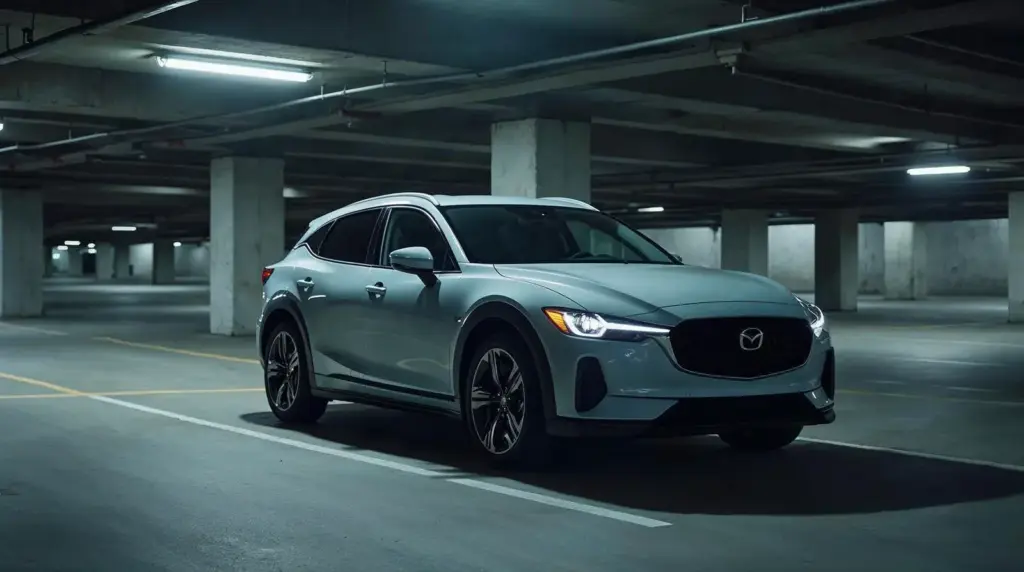
In basement car parks, signal capture can happen from a parked van or a stairwell. Thieves use relay devices to intercept the signal your key fob emits, even from several metres away. Keep the fob inside a Faraday pouch even when you are shopping or dining, because the pouch blocks the wireless signal. This prevents criminals from amplifying it to fool your car into unlocking. The pouch should stay with you, not in a handbag left open beside a table.
Car parks at malls, hotels and offices
Car parks at malls, hotels and offices are busy spaces where a thief can stand close to a vehicle without looking out of place. The best defence there is not a single gadget. It is the habit of checking, blocking and layering every time you leave the car. Always manually confirm the doors are locked before walking away, because criminals can use jammers to block the signal from your key fob. Storing your keys in a signal-blocking pouch and adding a physical lock creates extra layers that make a quick theft far more difficult.
Physical barriers and vehicle settings that slow a thief
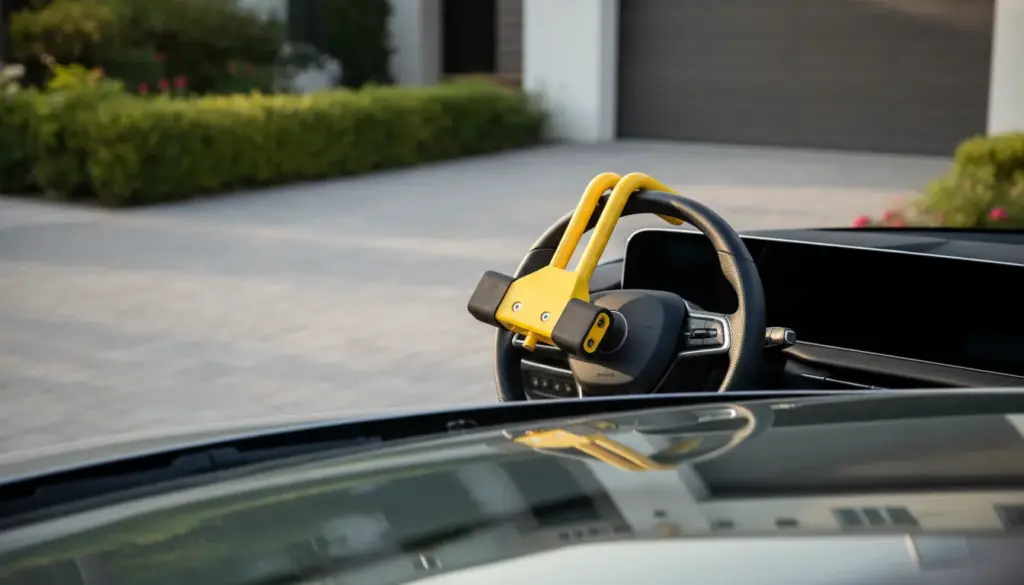
Electronic defences can fail, so a layered approach matters. A steering wheel lock is old technology, but it forces a thief to spend extra minutes inside the car. That delay is often enough to make the vehicle a less attractive target. Visible physical deterrents can also encourage a thief to move on rather than risk being caught.
Many modern vehicles have engine management diagnostic ports that can unlock and start the car. If your vehicle has this type of port, consider fitting a lockable cover. Thieves can exploit these ports to bypass the car’s security systems. A lockable cover makes that method significantly harder.
Bluetooth and Wi-Fi connections in the car should also be switched off when not in use. Hackers can use open wireless connections to reach the car’s entertainment or control systems. These systems can sometimes link to other vehicle functions, which makes an open connection a potential risk. The fewer open doors, the harder the job becomes.
Practical layers for driveways and overnight parking
A driveway feels secure, but it is still an outdoor space with easy road access. Lighting, visibility and physical barriers all change the calculation for an opportunistic thief. A car that looks difficult is often passed over for one that looks easy. This is especially important for keyless models, because thieves can capture the signal from a key left near the front door without ever entering your home.
Start with these practical steps. Keep your key fob and its spare away from the car, doors, and windows when you are at home, because thieves only need to be within a few metres to capture the signal. Storing the fobs in a signal-blocking pouch such as a Faraday Bag adds another layer of protection. You should also turn off wireless signals on the fob when it is not being used. Finally, use a steering wheel lock or car alarm, and park in your garage overnight if you have one.
- Park in a locked garage overnight if you have one, or park as close to your home as possible.
- Keep both keys in a Faraday pouch, well away from the front door and any ground-floor windows.
- Turn off the fob’s wireless signal when the car is not being used for long periods.
- Use a steering wheel lock or an additional alarm as a visible deterrent.
- Check the doors manually every time you leave the car, even in a hurry.
- Fit a lockable cover over the diagnostic port if your vehicle has one.
- Switch off in-car Bluetooth and Wi-Fi when they are not needed.
These layers do not make a car impossible to steal. Instead, they make it slower, louder and more visible to attack. Thieves using relay devices want to capture the key fob’s signal and drive away quietly within seconds. Any extra step that forces them to make noise or spend more time near the vehicle increases their risk of being spotted.
Keyless theft is fast, but it depends on a quiet routine. Thieves exploit the predictable habit of leaving keys near the front door, where the signal is easy to capture. Change the routine and the crime becomes far harder to complete. Simply storing keys well away from doors and windows, or inside a signal-blocking pouch, breaks the chain the criminals rely on.