A car GPS tracker is often sold as a simple promise. You fit a small device, open an app, and suddenly your vehicle has a digital shadow that follows it everywhere. The reality is more interesting. A tracker does not just show a dot on a map. It records movement, reports behaviour, and can change how you respond to theft, a late driver, or a fleet that burns too much fuel.
In the Gulf, where a car is often the most valuable asset outside a home, that extra layer of visibility matters. Modern devices go beyond simple location pinpoints by delivering real-time updates and instant alerts right to your phone. They can also provide customized driving reports and help find a stolen car. Understanding what the hardware actually does is the first step to choosing a system that works when it matters. This knowledge helps you select a tracker that fits your needs for security and peace of mind.
How a GPS Tracker Actually Finds a Car
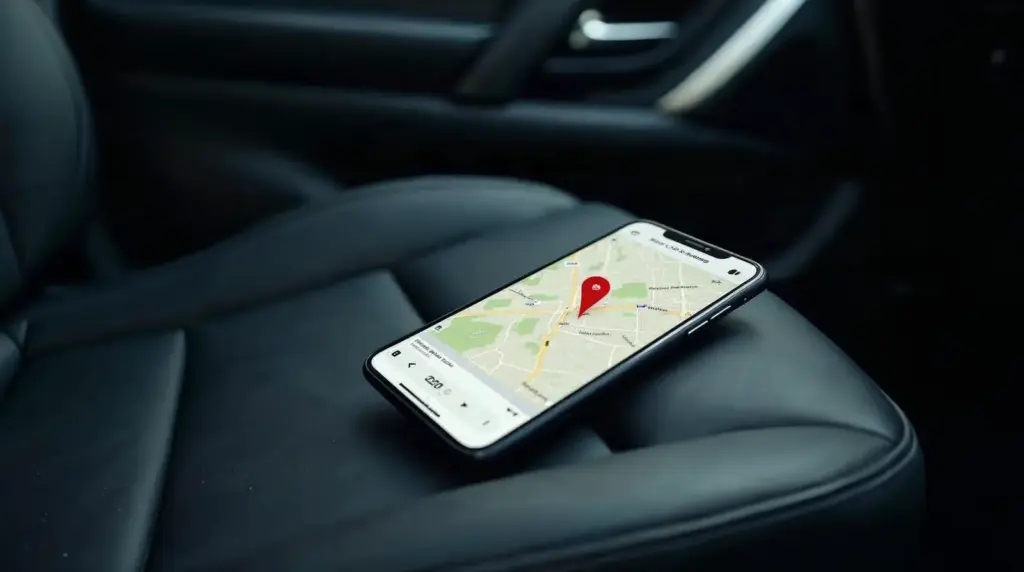
A GPS tracker does not call the car. It listens. Satellites orbiting the earth broadcast timing signals, and a receiver inside the tracker uses those signals to calculate its position. That position is then sent over a mobile network to a server, which pushes the data to your phone or a web dashboard. The whole chain depends on the satellite signal being clean and the mobile data connection being available.
The antenna is the quiet hero in this process. A weak antenna means late or inaccurate fixes, especially in underground car parks, between tall towers, or in multi-storey buildings. Many modern trackers use compact patch antennas that can receive from several satellites at once. In a region with open highways and dense city cores, antenna quality decides whether the tracker stays useful when the car leaves an open road and enters a shaded basement.
Once the device has a fix, it can report in different ways depending on its design. Some trackers send data continuously while driving. Others wake up at intervals or when the ignition is switched on. Knowing which behaviour you are buying prevents the common disappointment of opening an app and finding the car’s last position was recorded three hours ago.
OBD Trackers and Their Ignition Limits
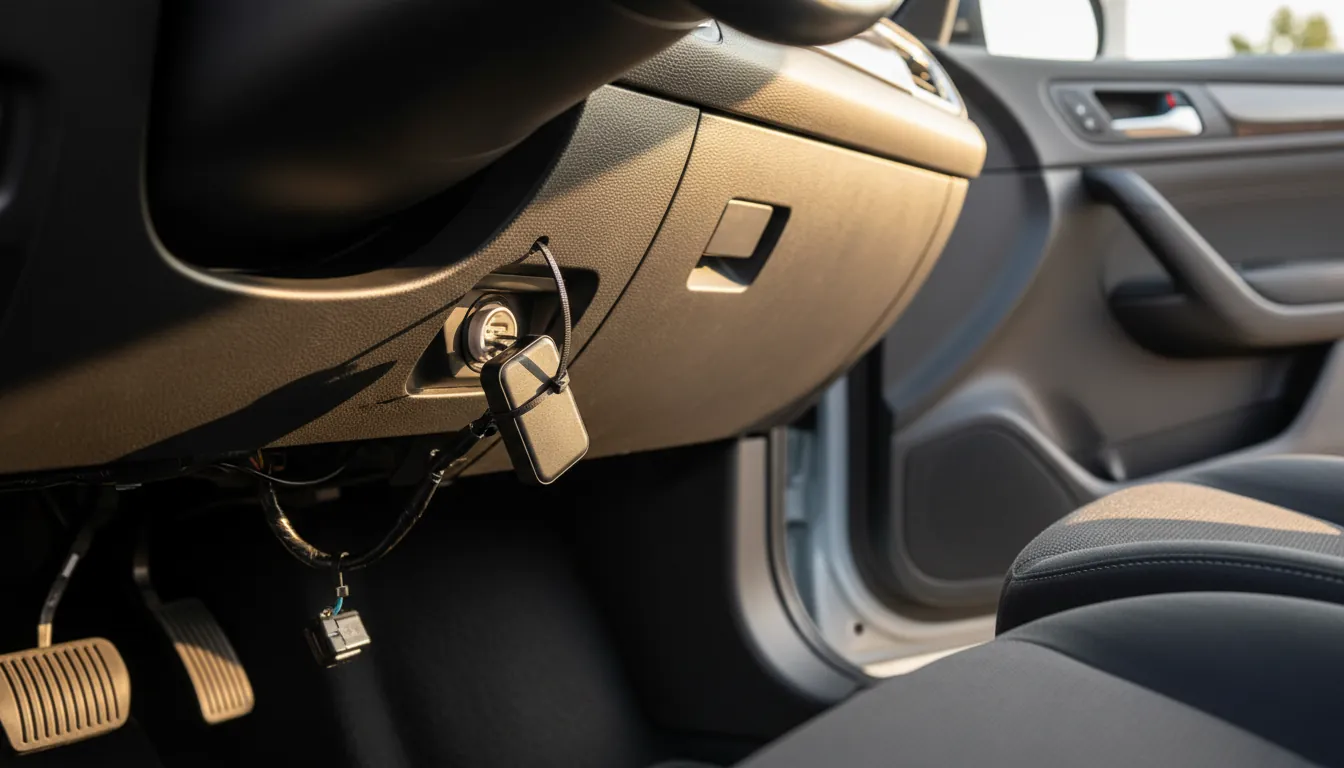
One popular type plugs into the car’s OBD port, usually located under the dashboard. These devices are easy to install and draw power from the vehicle, so there is no internal battery to charge. That convenience has a trade-off. Many OBD trackers only report while the ignition is on, which means a parked car can go quiet. If the vehicle is towed or moved with the engine off, the tracker may not update until the car is started again.
For daily driving, OBD trackers are practical. They can read vehicle data from the onboard computer, including fuel level, engine health, battery voltage, and diagnostic codes. That turns the tracker into more than a location tool. It becomes a simple vehicle health monitor. A parent can see that the family saloon has a low battery before it fails in a car park, or that a young driver is repeatedly braking hard on a particular road.
What Trackers Report Beyond Location
Modern trackers have moved far beyond a simple pin on a map. The useful ones turn movement into structured information. A parent can receive an alert when a car crosses a set boundary, such as leaving a neighbourhood after midnight. A fleet manager can see idle time, trip fuel economy, and distance driven. These reports are generated from the same position data, but the app organises them into patterns that are easy to act on.

Some devices also detect impact, rapid acceleration, and hard braking. That information reveals driving style and can provide an early warning after a collision, even if the driver does not call immediately. A tracker with impact detection can send an alert when a parked car is bumped in a busy car park. False alerts from heavy doors or passing trucks are possible.
The list below shows the type of alerts a well-equipped tracker can generate. Not every device offers all of them, and some require a subscription. The value is not in having the longest list, but in choosing alerts that match your actual routine. A parent of a new driver might prioritize curfew and hard braking alerts, while a fleet manager may focus on idle time and trip start notifications.
- Speed alerts notify you when a set limit is exceeded, which helps with young drivers and company vehicles.
- Geofence alerts trigger when the car enters or leaves a defined area, such as a home compound or a warehouse zone.
- Impact detection reports a collision or strong bump, even when the engine is off on some models.
- Curfew alerts flag movement during restricted hours, useful for parents and fleet supervisors.
- Trip start and end alerts confirm that a journey began or finished, so you know the car is where it should be.
- Fuel level and idle time reports help spot waste, from excessive warm-up periods to unusually long stops.
Trackers in Theft Recovery and Daily Security
When a vehicle with a tracker is stolen, the owner can report its location to the authorities. That does not guarantee recovery, but it removes the guesswork. Instead of searching a district or relying on roadside cameras, the police can move toward a specific coordinate. A tracker hidden inside the car is more useful than one left in plain sight, because professional thieves know where OBD ports are and a visible plug-in device can be removed within seconds.
Hardwired trackers are installed deeper in the vehicle and connected to its electrical system. They can report while the car is parked and often include a backup battery. That makes them better suited to theft recovery, because they continue working when the ignition is off. The installation is more involved, and the device is usually fitted by a technician. For many owners, that extra effort is justified by the ability to track a parked car that is towed or lifted onto a flatbed.
Choosing a Tracker for Gulf Conditions
Heat is a real factor in this region. A tracker mounted inside a cabin can face extreme temperatures when a car sits in the sun. Devices with internal batteries may degrade faster in that heat, which is one reason many drivers prefer OBD or hardwired units without a battery. A tracker tucked under a dashboard may stay cooler than one left on a sunlit parcel shelf, and a shaded location can improve long-term reliability.
Connectivity is the second consideration. A tracker needs mobile network coverage to send its position. In cities, that is rarely a problem. On remote desert roads or near border areas, coverage can become patchy. A device that stores positions locally and uploads them when the connection returns is useful for long trips. Check whether the tracker buffers data during network gaps, rather than simply going silent.
Finally, think about who will use the app. A complicated dashboard is useless if you never open it. The best tracker for a family is often the one with the clearest phone app, even if it lacks some advanced fleet features. Test the interface before committing. If the alerts are noisy and hard to manage, you will switch them off, and the tracker will stop serving its purpose.
What a Tracker Cannot Do
A GPS tracker cannot stop a car, lock the doors, or cut the engine unless it is part of a larger security system with those controls. A basic tracker only observes and reports. That is an important distinction, because some buyers expect the device to immobilise the vehicle remotely. Those features exist on more advanced anti-theft systems, but they are not part of a standard location tracker.
The legal side is equally clear. Tracking a vehicle you own is generally accepted, but tracking another adult without consent is a different matter. In many places, including parts of the Gulf, that can be unlawful. If you manage a fleet or monitor a family car, make sure the drivers know the device is fitted. Openness avoids both legal risk and the breakdown of trust.