Someone once said that if you are in a group being chased by a lion, you do not need to run faster than the lion. You just need to run faster than the others in the group. A similar principle applies to car security across Doha, Dubai and the wider Gulf. You do not necessarily need to make your vehicle the hardest to steal on the planet. You just need to make it more difficult than the one it is parked next to.
Effective security is about building layers of protection. Many modern cars arrive from the dealer with a factory alarm and an electronic immobiliser already buried in the wiring loom. Clever thieves can still bypass these built-in systems, often by grabbing or cloning the key signal itself. This allows them to silence the siren and start the engine. That is where aftermarket security enters the picture, and where a visible, physical barrier changes the calculation entirely.
How Factory Immobilisers Actually Work
An immobiliser prevents a vehicle from starting unless the correct fob, key or activation process is used. It is an electronic gatekeeper that checks for a matching transponder chip before allowing fuel flow or ignition spark. These systems can be personalised to a specific vehicle and are now standard equipment on practically every new car sold in many regions. They operate silently and invisibly, requiring no action from the driver beyond having the key present.
The strength of a factory immobiliser lies in its deep integration with the engine control unit. It is not a simple circuit that can be hotwired with two crossed wires under the dashboard. Thieves have adapted to this reality by moving away from mechanical break-ins toward relay attacks and key programming hacks. They amplify the signal from a key fob left near the front door of a villa and trick the car into thinking the owner is present. Once the engine is running, the immobiliser is satisfied and offers no further protection.
This is the key limitation you need to understand. An immobiliser acts as a single checkpoint at the moment of ignition. It does nothing to stop a thief who has already defeated that checkpoint through electronic trickery. It also provides zero visual deterrence. A thief walking through a mall parking structure cannot see whether your immobiliser is sophisticated or basic. They only see a vehicle that looks ready to take.
Alarms as a Layer of Noise and Attention
Factory alarms are designed to detect broken glass, forced doors or unexpected voltage drops and respond with a blaring siren. The theory is sound. A loud noise draws attention, and attention is the last thing a thief wants. In practice, car alarms have become so common in many cities that they often fade into the urban soundscape like a background noise that everyone respects but no longer investigates. People glance, see no obvious struggle and walk on.
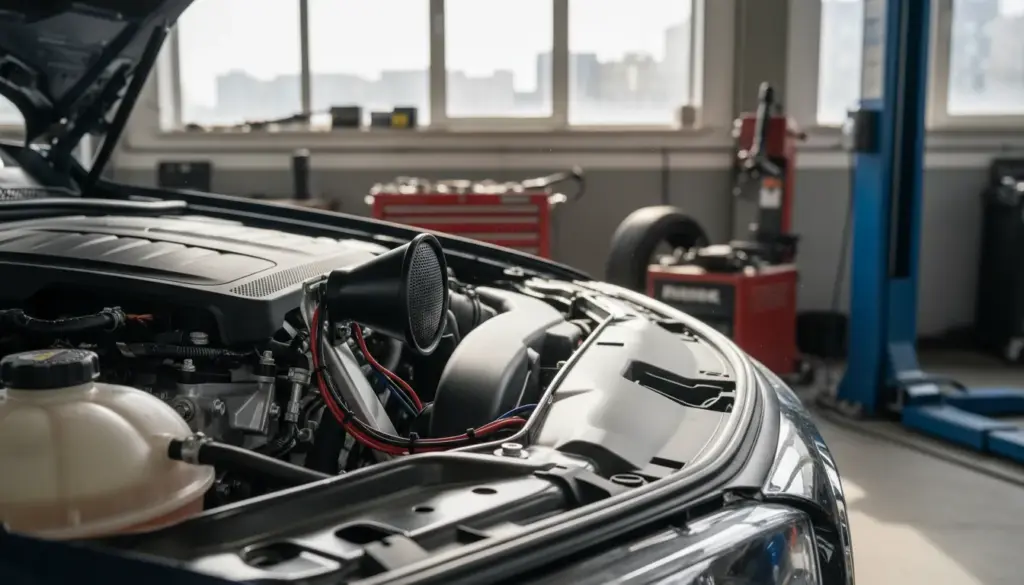
Aftermarket alarms can upgrade this layer significantly. Better systems add microwave sensors that detect motion inside the cabin before a window is even broken. Some include tilt sensors that trigger if a vehicle is being jacked up to have its wheels or catalytic converter stolen. The key is pairing the siren with a two-way pager or smartphone alert that notifies you directly. Without that notification link, an alarm relies entirely on the goodwill of strangers who are increasingly desensitised to the sound.
Alarms also serve a secondary function that is easy to overlook. They protect the contents of the vehicle as much as the vehicle itself. A smash-and-grab thief targeting a laptop on the passenger seat will be met with an immediate wall of noise. That can be enough to make them abandon the attempt and run. For vehicle theft specifically, an alarm alone is a thin defence. It is best understood as an early warning system rather than a standalone solution.
Steering Wheel Locks as Visible Fortification
Why a Physical Barrier Changes the Game
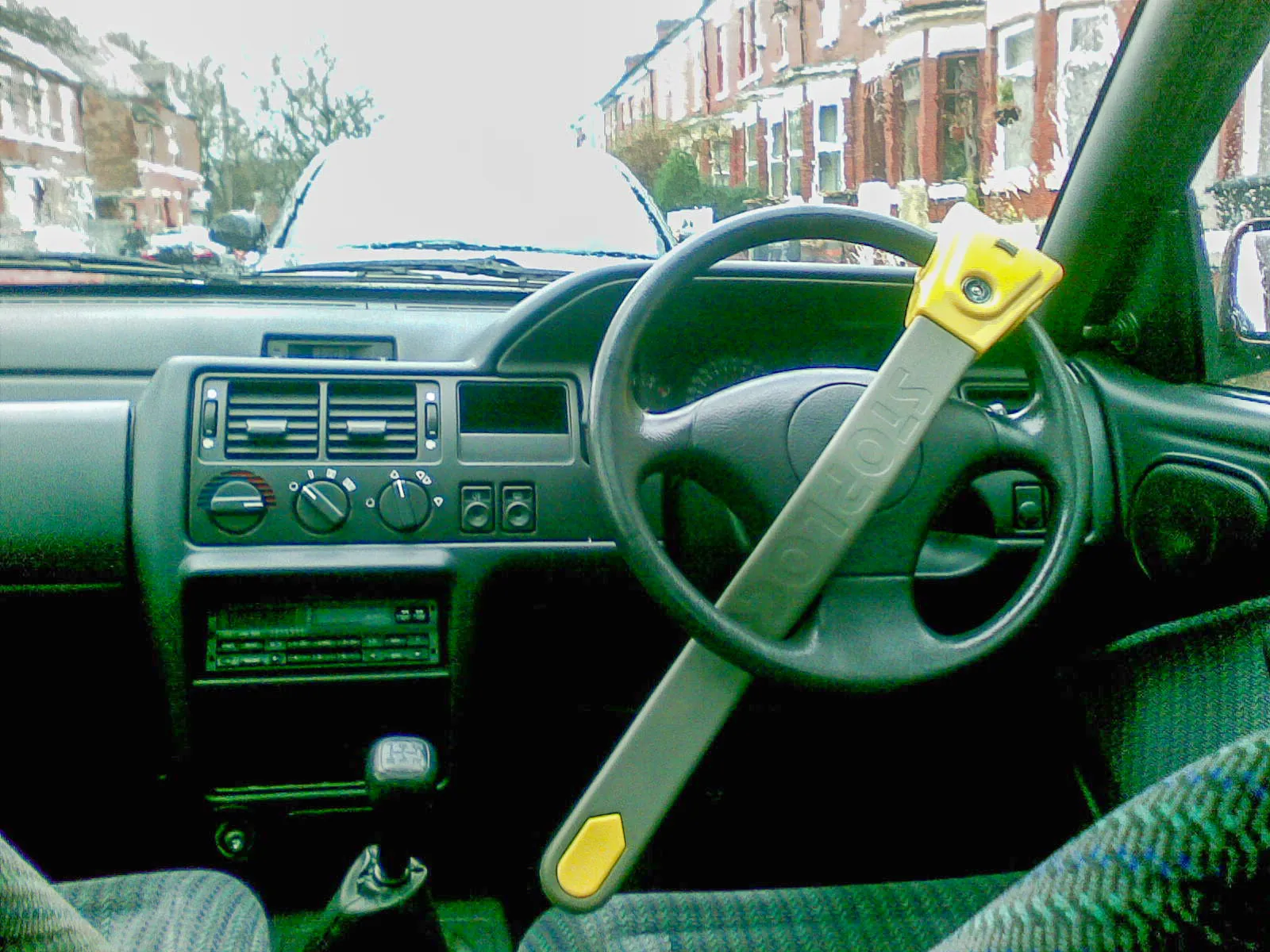
One of the most effective and usable examples of aftermarket security is a steering wheel lock. Not only should this prevent the vehicle from being driven if thieves enter, disable the security and start the engine. It is also a highly visible deterrent that helps dissuade opportunist thieves before they even touch a door handle. The psychology is straightforward. A thief scanning a row of cars sees one with a bright metal bar clamped across the wheel and moves on to the next target.
Car steering locks work by preventing the steering wheel from being turned. The ignition can still be switched on and the engine can run, but it will be almost impossible to steer in any direction unless the lock is removed. Some designs use a metal arm that extends across the wheel rim and catches on the windscreen or door frame. Others fit directly over the wheel with hardened pins that slide either side of a spoke. The best models are constructed from case-hardened steel that resists sawing and drilling.
The key rule with any steering lock is key discipline. Keep the lock key and any spares completely separate from your car key, ideally on a different ring stored in a different part of the house. A steering wheel lock is no good if you have left the key in your centre console or glove box. Store the key somewhere safe and memorable, because losing it means calling a locksmith or using an angle grinder on your own property. When not in use, stow the lock securely in the boot to prevent it rolling around and causing damage to the interior.
What to Look for When Buying a Lock
Not all steering locks are created equal, and the market offers everything from flimsy visual props to genuinely formidable barriers. The security ratings you should always look for come from independent testing bodies that attack these devices with the same tools thieves use. Sold Secure and Thatcham are two British standards that carry weight internationally. A lock that has earned their certification has survived timed attacks with hammers, saws, drills and pry bars.
Fitment matters as much as raw strength. A lock that does not sit snugly against the wheel rim leaves a gap that can be exploited with a pry bar. The Milenco High Security model, for example, uses two metal pins that slide either side of a spoke and a rotating metal arm that extends across the wheel. It is highly rated for ease of use because it goes on and off in seconds without a wrestling match. The Armaplate Resolute takes a different approach, covering the entire steering wheel with a hardened steel plate that makes the wheel effectively unusable until removed.
For a balance of cost and protection, the Stoplock Pro remains a popular choice with a simple hook-and-arm design that has been refined over decades. None of these devices makes a car theft-proof. A determined thief with a cordless angle grinder and no fear of noise can cut through almost anything. The goal is to make the process take longer, make more noise and require more tools. That combination shifts the risk-reward calculation firmly in your favour.
| Device Type | Primary Function | Visibility to Thief | Defeated By |
|---|---|---|---|
| Factory Immobiliser | Blocks engine start without key | Invisible | Relay attack, key cloning |
| Aftermarket Alarm | Audible alert on intrusion | Low (sticker visible) | Signal jamming, quick smash |
| Steering Wheel Lock | Prevents steering movement | High (bright metal bar) | Angle grinder, lock picking |
| Aftermarket Immobiliser | Blocks start without specific sequence | Invisible | Code guessing |
Layering Your Defences for Gulf Roads
Motor vehicle theft is a persistent concern in many regions, and the methods used by thieves continue to evolve with technology. In 2024 the Australian state of Victoria recorded its highest level of car theft in more than two decades, with over 25,000 thefts and nearly 4,000 attempted thefts representing a 41 per cent increase on the year prior. While local statistics differ, the global trend is clear. Thieves are becoming more organised and more adept at defeating single layers of electronic security.
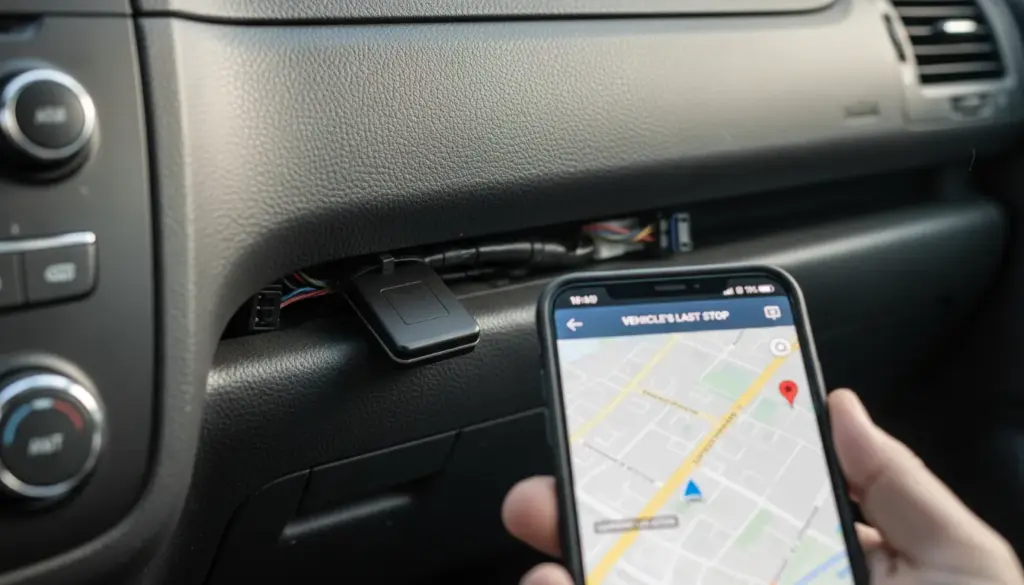
Using a visible deterrent like a steering wheel lock helps to put off an opportunistic thief from attempting to steal your vehicle. It adds an extra layer of complexity to breaking into and starting a car, but is only one part of the action you can take to reduce the chance of your vehicle being a target. Parking in a well-lit area and fitting a vehicle tracker with visible signage are also great ways to make thieves think twice. A tracker does not prevent theft but it dramatically increases the chance of recovery, especially when paired with a system that can immobilise the vehicle remotely once it is parked.
Removing high-value items like wallets, electronics and sunglasses from your car before leaving it can further help deter thieves from targeting your vehicle in the first place. A clean cabin with nothing on display suggests an owner who pays attention. Combine that with a bright steering lock, a blinking alarm LED and the subtle shadow of a tracker antenna, and you have built a layered defence that no sensible thief will bother to challenge. The lion will simply chase someone else.