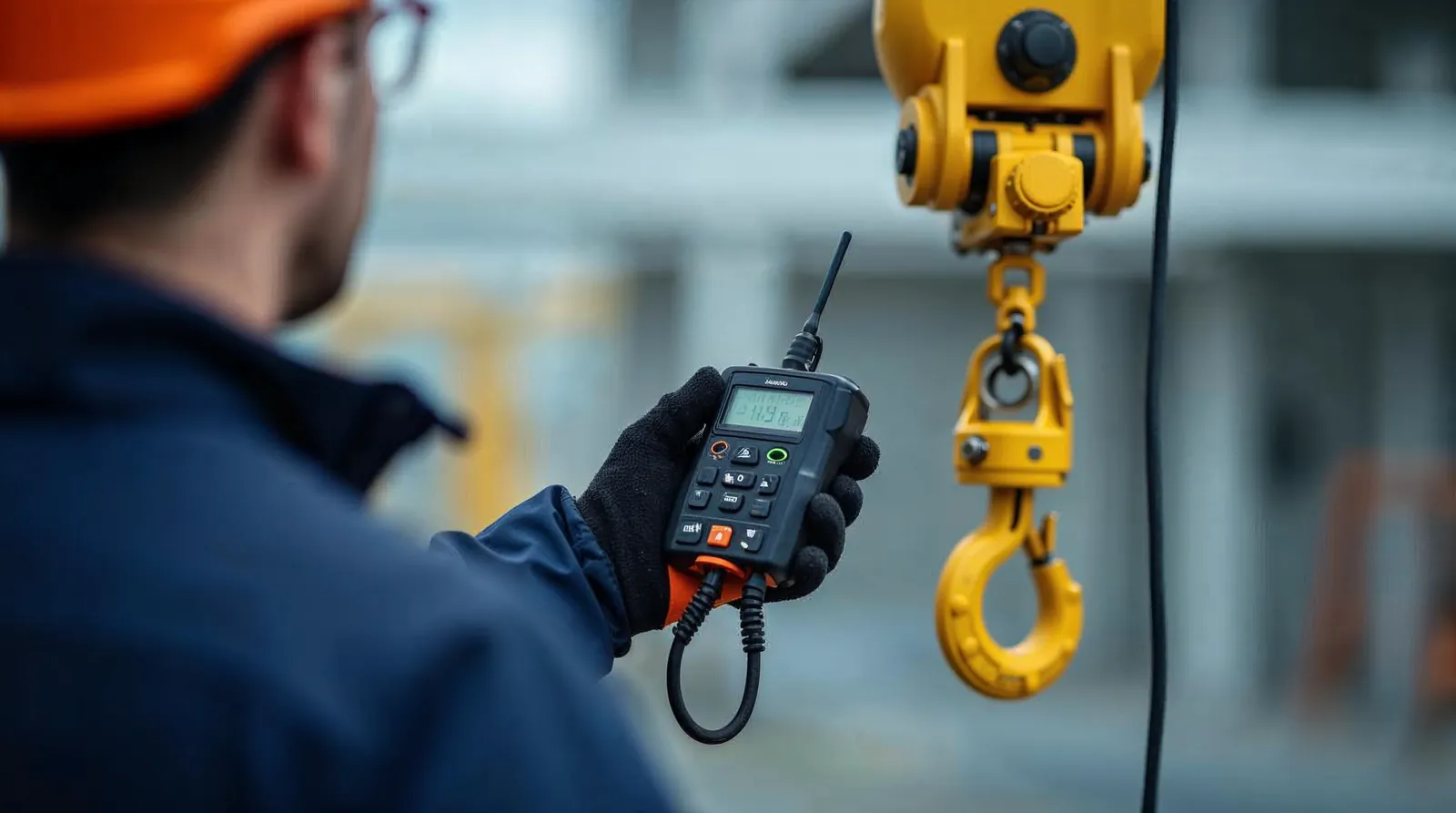
An industrial radio remote control looks simple from the outside. It consists of a handheld transmitter, a receiver bolted to a machine, and a few buttons that make a crane, hoist or conveyor respond. These wireless devices allow operators to control machinery from a safe distance, which reduces the risk of accidents. Yet behind that simple action sits a chain of radio frequency engineering, signal encoding and safety logic. This technology has quietly reshaped how operators work around heavy equipment.
Across industrial regions, these devices appear in ports, factories, construction sites and logistics hubs. They let one person stand at a safe distance while positioning a load, opening a gate or moving a machine through a tight space. The choice between a certified safety remote and a rugged industrial unit changes what happens when a signal drops or an emergency stop is pressed. Understanding how they work matters.
From Button Press to Machine Movement
Every radio remote system begins with the transmitter, the handheld or console-mounted unit the operator uses. When a button is pressed, the transmitter first converts the command into a specific encoded signal, a digital pattern that identifies both the action requested and the transmitter itself. The encoded signal then moves to the RF transmitter module, which converts it into radio waves. These waves leave through an antenna and travel to a receiver installed on the machine.
Unlike infrared signals used in household television remotes, radio waves can penetrate walls, dust and many physical obstacles without requiring a direct line of sight. This makes radio remote controls especially useful in busy industrial environments where operators need to stay at a safe distance. At the machine end, a receiver picks up the radio wave through its own antenna and decodes the signal. That circuitry translates the command into machine actions, such as energising a contactor, driving a motor or releasing a brake. The whole sequence happens in milliseconds, but each step has safeguards built in.
Signal Encoding and Interference Handling
Encoding is the first layer of protection against wrong commands. A properly encoded signal includes addressing information so that only the paired receiver responds. This prevents a nearby crane from reacting to a remote meant for a hoist in the same hall. Modern systems also use rolling codes or similar techniques to reduce the risk of replay or accidental duplication.
Interference is a constant concern in industrial environments. Metal structures, variable frequency drives and other radio equipment can all generate noise. Remote controls use specific frequency bands, commonly 433 MHz, 868 MHz, 315 MHz or 915 MHz depending on national regulations. Choosing a frequency that suits the local environment is part of the commissioning process. When interference does occur, the receiver must fail in a predictable way. In certified safety systems, a loss of valid signal triggers a controlled stop. In less critical industrial remotes, the machine may simply hold its last state until communication resumes.
Safety Architecture and Certified Stops
Safety is not a single feature bolted onto a remote control. It is an architectural choice. The most demanding applications use dual-microcontroller designs where two independent processors cross-check data integrity constantly. If one processor disagrees with the other, the system halts the machine rather than continuing with uncertain information. Independent bodies such as TÜV certify this guaranteed safety.
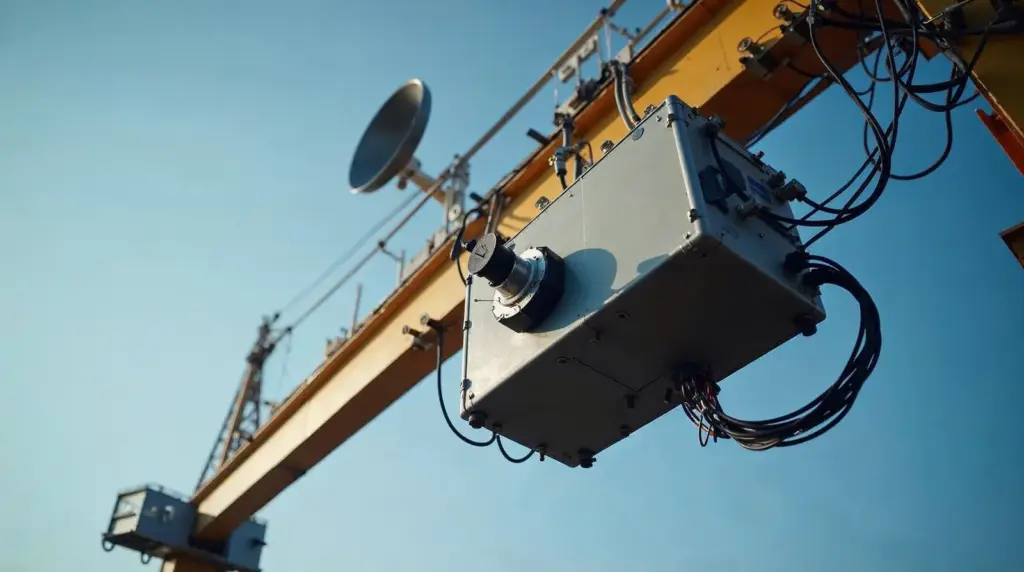
The certification level depends on how dangerous the application is. SIL 3 with PLe is used for the most dangerous or difficult to protect situations. SIL 2 with PLd covers moderately dangerous applications or those that can be partly protected by other measures such as barriers or restricted access zones. Industrial radio remote controls are suitable where no certified safety level is required. These units are still ruggedised to withstand harsh conditions, but they do not carry the same independent verification of their stop behaviour.
Emergency Stop and Fail-Safe Behaviour
The emergency stop button on a safety remote is wired into the safety architecture so that pressing it produces an immediate and absolute stop. The same response occurs if the machine itself fails or if radio communication is disturbed. This guarantee protects people first, not production uptime. A useful way to think about this is the difference between a command and a guarantee. An industrial remote can send a stop command. A safety remote can guarantee that the stop will happen even when parts of the system fail.
For operators in harsh environments, where heat, dust and humidity are part of daily work, fail-safe behaviour also means the remote must survive physical abuse. Units get dropped, run over, wet and covered in sand. These conditions can easily damage less sturdy equipment and create dangerous situations. A well designed industrial remote anticipates this and keeps functioning or fails safely rather than sending a false command. This ensures that the machinery stops or remains controlled even when the remote itself is compromised.
Choosing the Right Remote for Gulf Conditions
Selecting a radio remote control starts with the machine and the risk around it. A gantry crane lifting containers in a busy port has different needs from a conveyor in a packaging hall. The first may require a certified safety system. The second may work well with a rugged industrial unit that has no SIL rating. Frequency range is the next practical check. In some regions, regulatory allocations may differ from European or North American bands.
Ergonomics also matter more than many buyers expect. An operator may hold the transmitter for an entire shift. The weight, grip shape, button layout and feedback all affect productivity. A remote that is uncomfortable leads to slower reactions and more mistakes, even if its radio performance is excellent. Local suppliers and system integrators can confirm which bands are permitted and which are congested by existing equipment.
- Frequency range should be checked against local regulations and existing site interference before purchase.
- Number of channels determines how many functions can be controlled simultaneously on one machine.
- Ergonomics and button layout should match the operator’s gloves, working position and shift length.
- Safety certification level must be matched to the actual risk of the application, not assumed from price.
- Environmental sealing should cover dust, humidity and occasional immersion if the remote works outdoors.
- Battery type and charging method affect uptime in remote sites where spare batteries are not always available.
After the list above, one more factor deserves attention. The receiver’s integration with existing machine controls can be simple or complex. Some machines accept a straightforward relay output. Others need an industrial bus interface for synchronised multi-crane management or automated process control. Planning this early avoids expensive rewiring later.
Applications Across the Gulf Workplace
Radio remote controls first proved their worth in lifting and handling machinery. Overhead cranes, jib cranes and hoists are natural fits. The operator can walk around the load, watch the rigging and position the hook without being tied to a pendant cable. That mobility reduces the need for hand signals and improves placement accuracy.
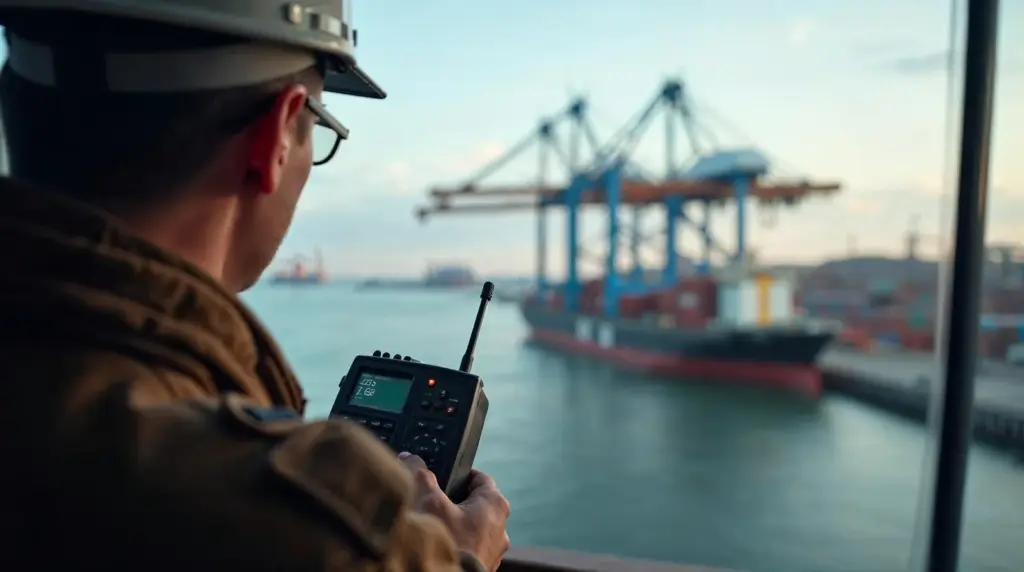
Beyond lifting, the same technology appears in intralogistics, people transport equipment and factory automation. Liquid and bulk transfer operations use remotes where the operator must stay clear of hazardous flows. This keeps personnel at a safe distance from spills, vapours or moving product. Industrial vehicles and construction equipment also benefit when a driver needs to operate a winch, stabiliser or gate from outside the cabin. The wireless link allows one person to manage these functions without returning to the controls.
Some environments add extra constraints. Potentially explosive conditions require remotes designed for those atmospheres. The selection process then includes not only radio performance and safety level but also the equipment’s suitability for the specific hazard zone. This is where made-to-measure solutions become necessary rather than optional.
Smart Features and Future Directions
The next generation of industrial radio remotes is growing more connected. Real-time monitoring lets a supervisor see battery state, signal quality and active commands from a control room. This connectivity also supports safer operation because workers can control equipment from a distance. Predictive maintenance uses that data to flag worn buttons or failing antennas before they cause downtime.
Connectivity with industrial automation systems is also expanding. A remote can now interface with a programmable logic controller or an industrial bus, allowing it to participate in automatic process cranes and synchronised multi-crane operations. This integration means the remote becomes one node in a larger control architecture rather than a standalone wireless pendant. The system can exchange data and commands without interruption with other automated equipment on the network. For readers in industrial regions, these developments matter because ports, logistics parks and manufacturing sites are investing heavily in automation. A radio remote that can integrate with those systems today will remain useful longer than a basic unit that only sends on and off commands. The key is to choose a system that matches both current risk and future connectivity needs.