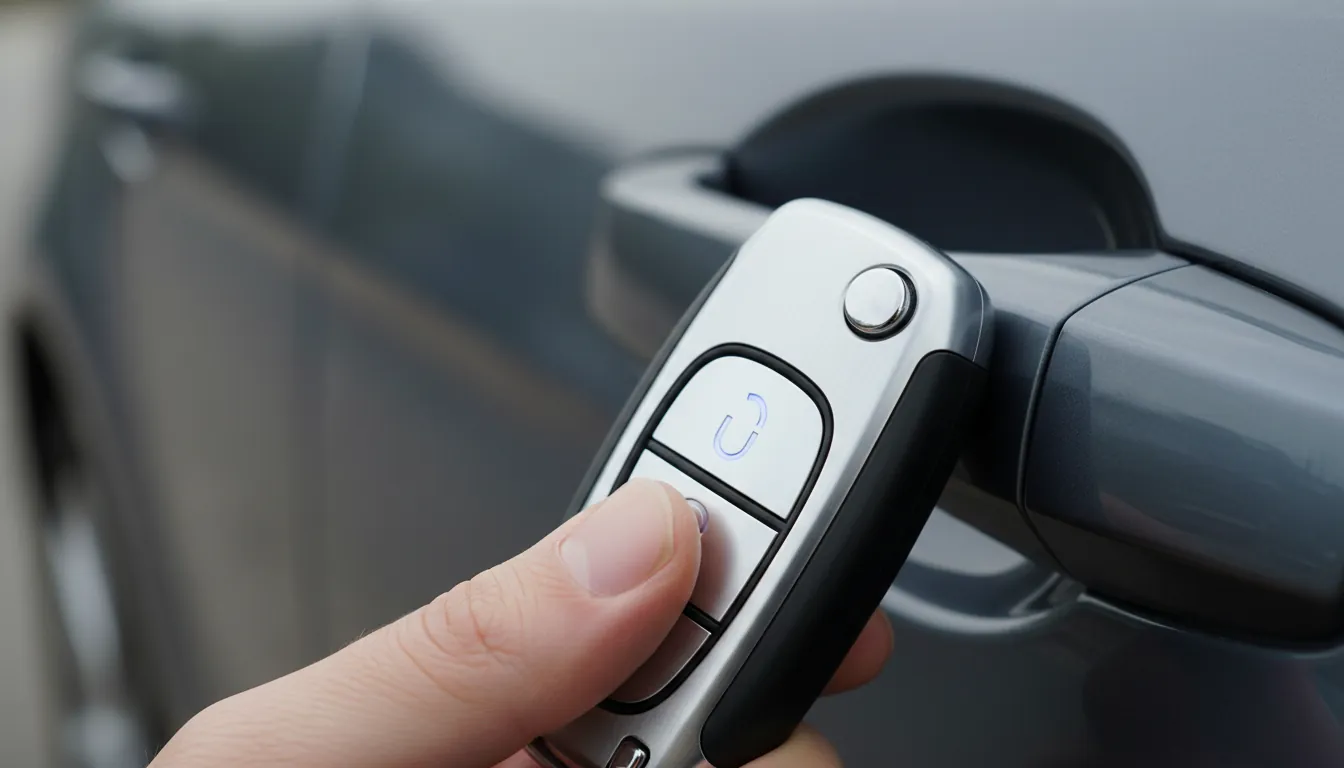
Press the unlock button on your key fob and a silent, split-second negotiation takes place between your car and that little plastic transmitter. The signal that flies through the air is not a simple fixed phrase like an old password whispered to a guard. It is a single-use cipher, born from an algorithm, that expires the moment it is received. That mechanism is called rolling code technology, and it is the reason a thief with a radio scanner cannot simply record your fob and drive away thirty seconds later.
For drivers in Doha, Dubai or Riyadh, where vehicle theft techniques grow more sophisticated by the year, understanding this layer of protection is not just academic curiosity. It explains why a replacement key from a dealership costs what it does. It also clarifies why certain older used cars carry a hidden risk. Rolling code is the quiet guardian of modern access, and its story is worth knowing.
How a Rolling Code Handshake Actually Works
At its heart, a rolling code system pairs two components that share a secret. The key fob holds a counter and an encryption key, and the vehicle’s body control module holds the same counter and the same key. When you press a button, the fob increments its counter, feeds the new number through an algorithm along with the secret key, and transmits the resulting code. The car’s receiver runs the identical calculation. If the codes match, the doors unlock and both sides advance their counters in lockstep.
Why a Tolerance Window Prevents You Getting Stranded
There is an obvious practical problem with this synchronised dance. What happens if your child plays with the fob while you are out of range, clicking the button twenty times in the kitchen? The fob’s counter races ahead and the car never hears those signals. A naive system would permanently lose sync, leaving you locked out. Engineers solved this with a forward-looking acceptance window that stretches across hundreds of future codes.
When the vehicle sees a code, it does not require an exact match for the very next number in the sequence. It checks the next several hundred valid codes that could be generated from the current counter position. If the received code falls anywhere inside that window, the command is accepted and the car resynchronises to the new counter value. Codes behind the current position are rejected forever. This careful design keeps the system resistant to accidental button presses while maintaining the one-time-use security property.
The Encryption Engine Behind the Signal
Not all rolling code implementations are created equal. The most widely deployed system in vehicle access is KeeLoq, a proprietary block cipher used in millions of key fobs, garage door openers and gate controllers worldwide. KeeLoq uses a transmission code with a portion devoted to encryption. That encrypted section offers a vast number of possible combinations, and a brute-force scan would take an impractically long time.
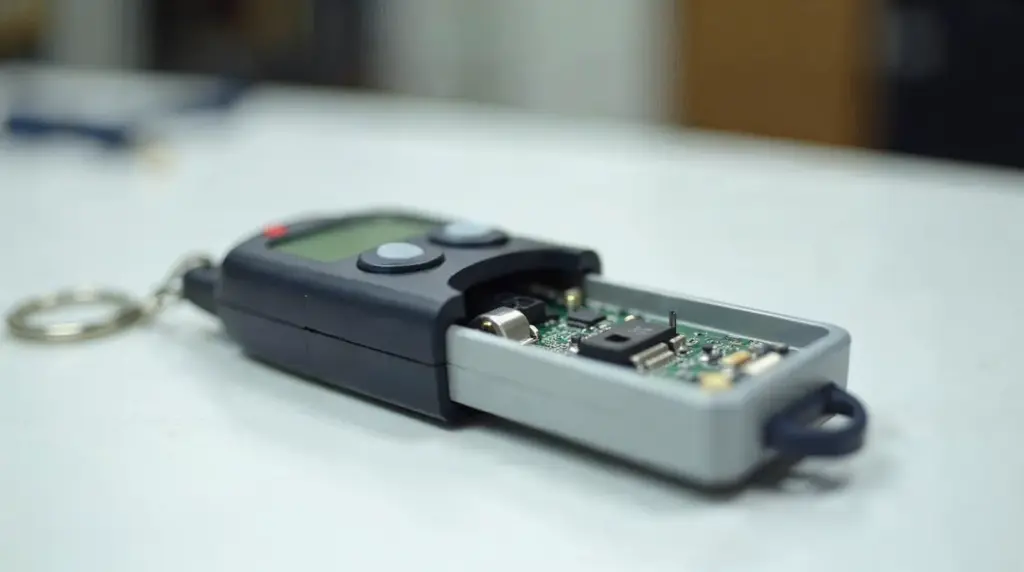
The algorithm scrambles the counter value, the device serial number and a secret manufacturer key into a stream that appears completely random to an eavesdropper. The vehicle’s receiver knows the manufacturer key and can reverse the process to extract the serial number and counter. If both match a paired fob, the door opens. The mathematical complexity means that even if an attacker captures hundreds of transmissions, they cannot reverse-engineer the secret key in any practical timeframe.
Fixed Code Versus Rolling Code in the Real World
A fixed-code signal can be captured with equipment costing less than a tank of petrol. The thief simply waits near your car, records the transmission when you lock it, and returns later to replay the identical signal. Rolling code remotes eliminate this entire category of attack. They can be copied onto universal replacement fobs only if the specific code family is supported, and even then the process requires active participation from the vehicle’s receiver during a pairing procedure. The days of cloning a key fob from across a car park are over.
What Rolling Code Does Not Protect Against
Understanding the limits of a security technology is just as important as appreciating its strengths. Rolling code stops replay attacks cold, but it was never designed to counter a relay attack. In that scenario, two thieves work together with signal amplifiers. One stands near your front door and picks up the faint radio transmission from your fob sitting on the hallway table. The other stands next to your car with a receiving device. The signal is extended in real time, not recorded.
Why This Matters When Buying a Used Car in the Gulf
The used car market across Qatar, the UAE and Saudi Arabia is enormous, and it contains a long tail of older models that predate modern security standards. A 2008 Land Cruiser or a first-generation Lexus LX might still be running fixed-code remotes. The mechanical reliability of these vehicles is legendary, which keeps them on the road far longer than their access technology deserves. A buyer focused on engine compression and service history rarely thinks to ask about the key fob’s encryption.
Checking what you have is straightforward. Look up the remote’s model number, usually printed inside the case, and search for its specifications. If the description mentions DIP switches or a fixed frequency without any reference to hopping or rolling code, you are dealing with a system that offers no protection against code grabbing. An automotive locksmith who specialises in vehicle security can advise on upgrade options for your specific model. The risk is not theoretical. A fixed-code vehicle parked at a shopping mall presents an opportunity that requires minimal technical skill to exploit.
Rolling Code Technology Beyond the Car Door
This matters because the boundary between vehicle security and home security has blurred. Many households in the Gulf store their cars inside a garage that connects directly to the living space. A compromised garage door is not just a risk to the vehicle. It is an unlocked interior door to the entire home. If your opener is more than fifteen years old, it is worth verifying whether it still relies on a fixed code.
The following signs suggest an older fixed-code system that deserves an upgrade. Remotes with physical DIP switches inside almost always use a static signal that never changes, making them easy to copy. Systems manufactured more than ten to fifteen years ago often rely on this outdated technology, which broadcasts the same code at every press. Because a fixed signal can be intercepted and replayed with inexpensive equipment, it creates a serious security gap. If you recognise your setup in this list, a conversation with a garage door professional is the logical next step.
- The remote has a physical row of tiny DIP switches inside the battery compartment. These switches set a static code that never changes between presses.
- The remote operates on a crystal frequency below 50 MHz. These older crystal-based transmitters almost always use fixed-code protocols.
- The garage door opener unit was manufactured many years ago and has never had its receiver board upgraded or replaced.
- You can open the door by pressing a universal remote that was programmed simply by copying the original signal without any pairing procedure on the motor unit.
- The remote’s model number, when searched online, returns results that mention fixed code or make no reference to hopping, rolling or KeeLoq technology.
- You bought a spare remote from a street-side key cutter who copied it in seconds without needing access to the garage motor itself.
Upgrading a garage door opener to a rolling code system is a one-time job. The new motor unit or receiver board pairs with its remotes through a learn procedure that exchanges cryptographic keys, not static patterns. Once installed, the system protects itself automatically. There are no codes to rotate, no passwords to remember and no maintenance routines to follow. The technology simply gets on with its work, generating a fresh identity for every single command. The next time you press that button and hear the locks clunk open, you will know exactly what just happened in the silent space between your thumb and the car.